
Your roof is one of the most important parts of a building. It keeps you and your investments safe from rain, snow, wind, and sun. If you are planning a new build or a major renovation, you may need to choose between a flat roof and a pitched roof.
Both types of roofs can protect your home or business, but they are different. Understanding the differences can help you choose the roof that works best for your needs.
What Is a Pitched Roof?
A pitched roof is a roof that has a slope. You can call it a “sloped roof” or a “gable roof.” This is one of the main differences when comparing a flat roof vs pitched roof.
A gable roof is a type of pitched roof that has two sloping sides that meet at the top.
Pitched roofs have been used for hundreds of years. People like them because they help rainwater, snow and debris slide off easily. This kind of roof is very common in places where it rains or snows a lot.
What Is a Flat Roof?
A flat roof looks and feels flat, but may have a very small slope. Many commercial buildings use flat roofs, and more homes are using them too.
Flat roofs are easier to walk on and sometimes easier to install. But because they are mostly flat, water and snow don’t run off as quickly as on a pitched roof. That means they need special materials, so water does not sit on them for too long.
Flat Roof vs Pitched Roof: Key Differences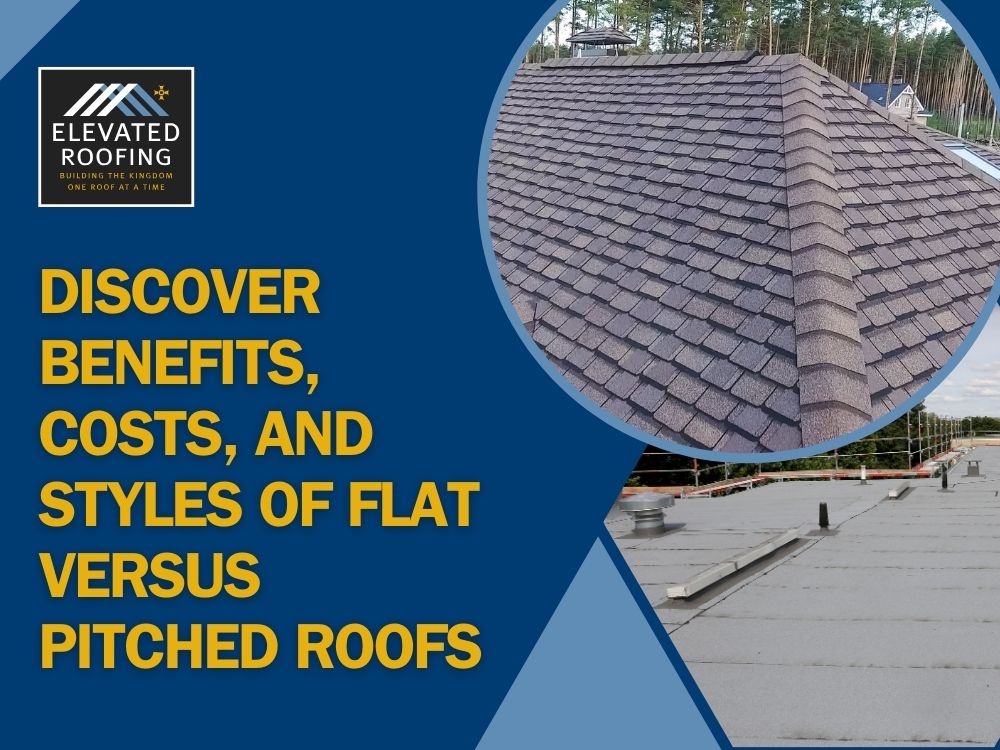
When we think about a flat roof vs pitched roof, there are some important differences to know:
1. Water and Snow Drainage
On a pitched roof, rainwater runs off quickly. This keeps water from sitting on top of the roof.
On a flat roof, water can sit longer before it drains. This means you must make sure the roof has good drainage systems.
- Ventilation and Moisture Control
On a pitched roof, ventilation usually happens through the attic space. Air enters through intake vents and exits through exhaust vents, helping reduce heat buildup and prevent moisture problems.
On a flat roof, there is typically no attic space for natural airflow. Ventilation and moisture control depend on how the roof system is designed. Proper insulation and drainage are important to help prevent condensation and protect the structure.
3. Cost to Build
Flat roofs are often less expensive to build. They use less material and take less time. Pitched roofs cost more because they use more material and take more work to build.
So, if you want something that costs less upfront, a flat roof might be a good choice.
4. Space and Usable Area
One big benefit in the flat roof vs pitched roof debate is space.
Flat roofs give you extra usable space on top. Some people use flat roofs as roof decks, gardens, or patios. This extra space can be good if you don’t have a big yard or if you want a special outdoor spot above your home or business.
A pitched roof can’t give you that kind of livable space. Instead, you might get some attic storage with a pitched roof.
5. Look and Style
How your home or business looks may matter a lot to you. A pitched roof gives a classic, traditional look. Many people think it makes a home look taller and nicer.
Flat roofs have a modern style. They look clean and simple. Some people love this look, especially in modern or minimalist designs.
6. Maintenance
Every roof needs care over time.
Flat roofs may need more frequent checks. Because water is on the surface longer, you have to watch for leaks and make sure drains are clear. But, you’re able to perform maintenance more easily without the hazards of a sloped roof.
Pitched roofs don’t usually need as many checkups because water moves away quickly. Still, you should inspect them too, especially after storms.
7. Longevity
In many cases, pitched roofs last longer than flat roofs. This is because they shed water and snow better.
Flat roofs can last just as long, but they must be built with quality materials and be taken care of often. You’re also able to extend the life of your flat roof with roof coatings instead of needing a full roof replacement.
When you compare a flat roof vs a pitched roof, think about how long you want your roof to last and how much time you can spend on care.
Are Flat Roofs Better Than a Gable Roof?
This is a question many homeowners ask frequently. The simple answer is it depends on your needs. If you want extra outdoor space, a modern look, and easier installation, flat roofs can be better. If you live where it rains or snows a lot, or you want a roof that has a long life with less maintenance, then a pitched roof or a gable roof may be better.
So, are flat roofs better than a gable roof? The answer is not one-size-fits-all. Each roof type has its own strengths based on what you want.
Make the Best Choice for Your Home
Now that you know more about flat roofs vs pitched roofs, how do you choose?
Ask yourself these questions:
- What is the weather like where I live?
- Do I want extra space on top of my roof?
- How much can I spend on installation?
- How much maintenance am I ready to do?
- What style of home do I like more?
Think about these and write your answers down. Talking to a roofing expert can also help you make the right choice.
Still Deciding Flat Roof vs Pitched Roof? Let Elevated Roofing Help
Choosing between a flat roof and a pitched roof depends on your home, budget, and style.
Elevated Roofing is a professional roofing company that can help you choose the best roofing option for your home. Call us today and figure out which is best for you!



Comments are closed